Choosing a coworking space is more consequential than it first appears. You'll spend the majority of your working hours there. It will shape your focus, your energy, your professional relationships, and — over time — your sense of professional identity. Getting it wrong is an expensive mistake, not just financially but in terms of lost time and morale.
Here are the eight factors that actually matter when evaluating a coworking space — the ones that experienced coworkers consistently cite as decisive.
1. Location relative to your actual life
The obvious one, but worth stating precisely. You don't just need a space in the right city — you need a space that works relative to your actual daily life. Where do your clients come from? Where do you live? Where do you exercise, eat lunch, see people?
A coworking space that's technically in a good neighbourhood but requires two tram changes from your apartment will gradually wear you down. A 20-minute pleasant walk beats a 40-minute commute on paper, always. Don't underestimate commute friction — it's one of the top reasons people stop using coworking spaces they initially liked.
2. The noise level — and whether it matches your work type
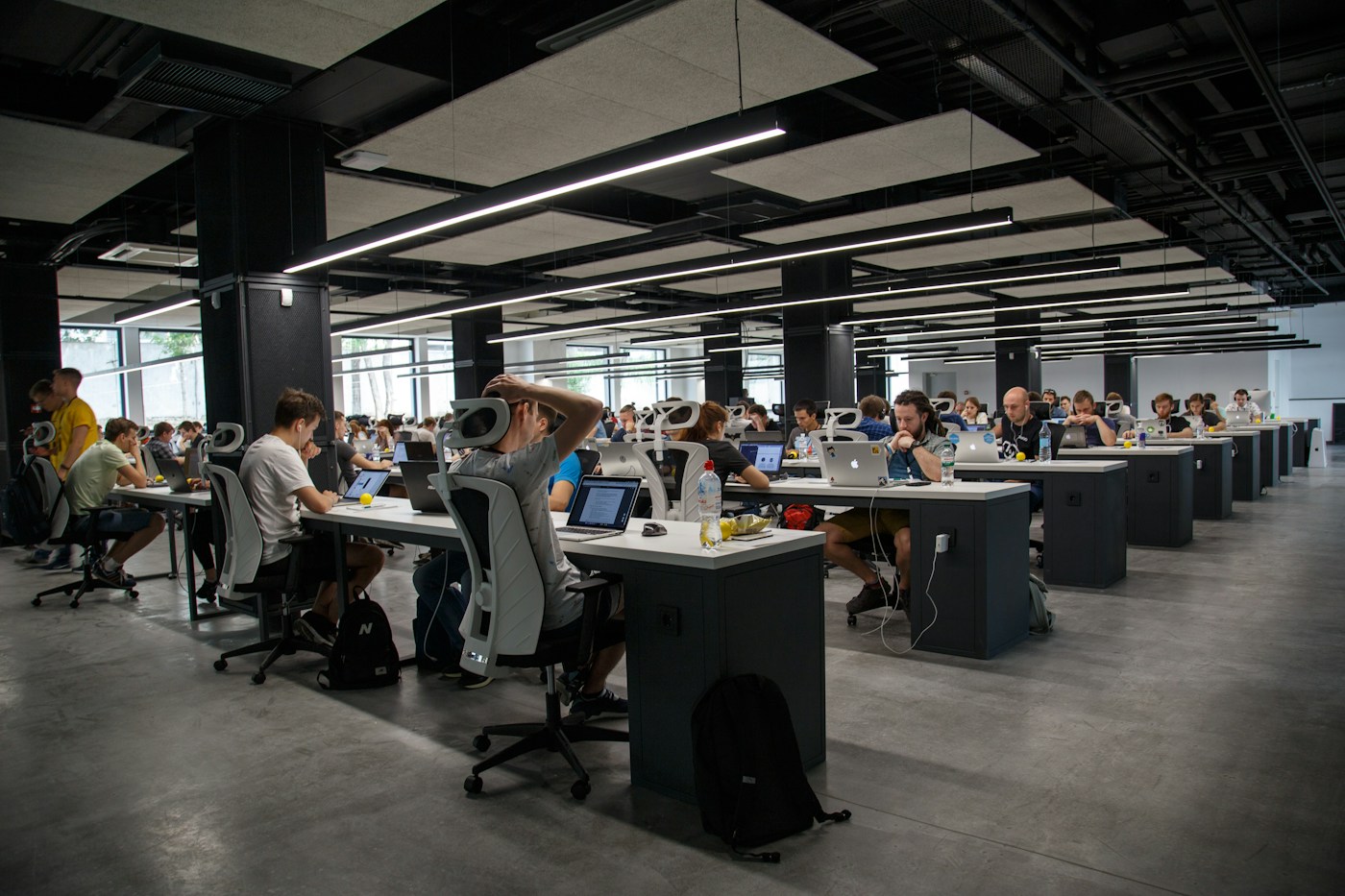
This is the factor that catches most new coworkers off guard. Noise levels vary enormously between spaces, and between different areas of the same space. A sales team doing back-to-back calls and a developer trying to debug complex code have entirely incompatible noise needs.
Visit any prospective space at the time of day you'd normally arrive. Not at 9am on a Monday when it's quiet, but at 11am when it's at peak capacity. Sit in the area you'd realistically use. If you find it difficult to concentrate during a 20-minute visit, you'll find it impossible after six months.
3. Internet speed and reliability — not just the advertised spec
Every coworking space claims fast WiFi. What varies dramatically is reliability — whether speeds hold during peak hours, whether the connection drops on video calls, whether the upload speeds match the download speeds. Symmetrical speeds matter if you do any kind of video production, large uploads, or cloud computing.
Ask the space for their actual connection spec. Run a speed test during your trial day. If your work is internet-dependent, this is a non-negotiable.
4. Meeting room availability and cost
Many coworking spaces advertise meeting rooms but make them surprisingly hard to use. Rooms that require 48-hour advance booking, rooms that cost 500 SEK per hour on top of your membership, rooms that are perpetually occupied by a few large teams — these frustrations compound quickly.
If you have regular client calls or team meetings, ask specifically: how many meeting rooms does the space have? What's the typical advance booking time? Are any credits included in your membership tier?
5. The community composition
Who else works in the space? This matters more than the furniture. A space full of people in your industry or adjacent ones — where you might stumble into a conversation that leads to a referral, a collaboration, or a new client — is worth considerably more than an equivalent space where the community feels disconnected.
Ask the space manager about the community profile. Are there regular events? Is there a Slack or community channel where members connect? Do people actually eat lunch together, or does everyone disappear at noon? These questions tell you whether community is real or just a marketing word.
6. Contract flexibility
Your needs will change. You might land a big project and need a private office for three months, then go back to a hot desk. You might move city. You might get a contract that means you're travelling constantly and barely use the space.
Spaces with rigid annual contracts, steep cancellation fees, or no pause options are a liability. In the Swedish market, most quality coworking spaces offer rolling monthly contracts as standard — be wary of any that don't.
7. The ergonomics
Spend eight hours in a poor chair at a badly positioned monitor, and your body will tell you about it for days. Ergonomics are easy to overlook on a brief visit but they become very obvious over weeks and months.
Good coworking spaces invest in proper ergonomic chairs — Herman Miller, Haworth, Kinnarps, or equivalent. Height-adjustable desks are increasingly standard in Swedish workplaces and a genuine benefit for people who sit for long periods.
8. The intangibles — vibe, light, smell
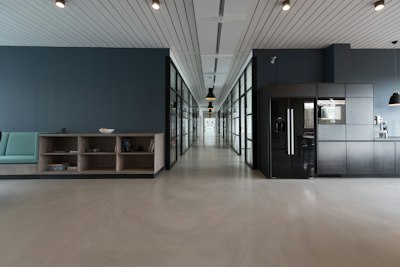
This sounds unscientific, but it matters. Does the space feel good to be in? Is it light and airy or dim and oppressive? Does it smell fresh or slightly stale? Is the decor pleasant or does it make you faintly depressed to look at?
Research on work environments consistently shows that natural light, good air quality, and aesthetically pleasant surroundings improve both mood and cognitive performance. Your body knows this instinctively — trust the feeling you get when you walk in, because you'll be walking in every day.
Every listing on Coworkin is verified for accuracy. Browse by city, filter by amenities, and find your ideal workspace. Start searching
One final tip: always do a trial day
No amount of research replaces the experience of actually working in a space. Almost every coworking space in Sweden offers a free or very low-cost trial day. Use it. Bring your full setup, work your normal hours, and pay attention to how you feel at the end of the day. That feeling is your most reliable guide.