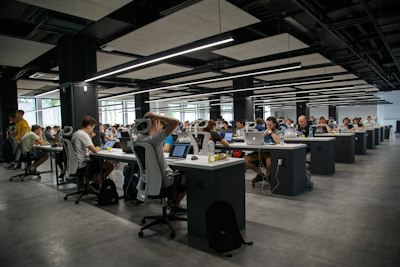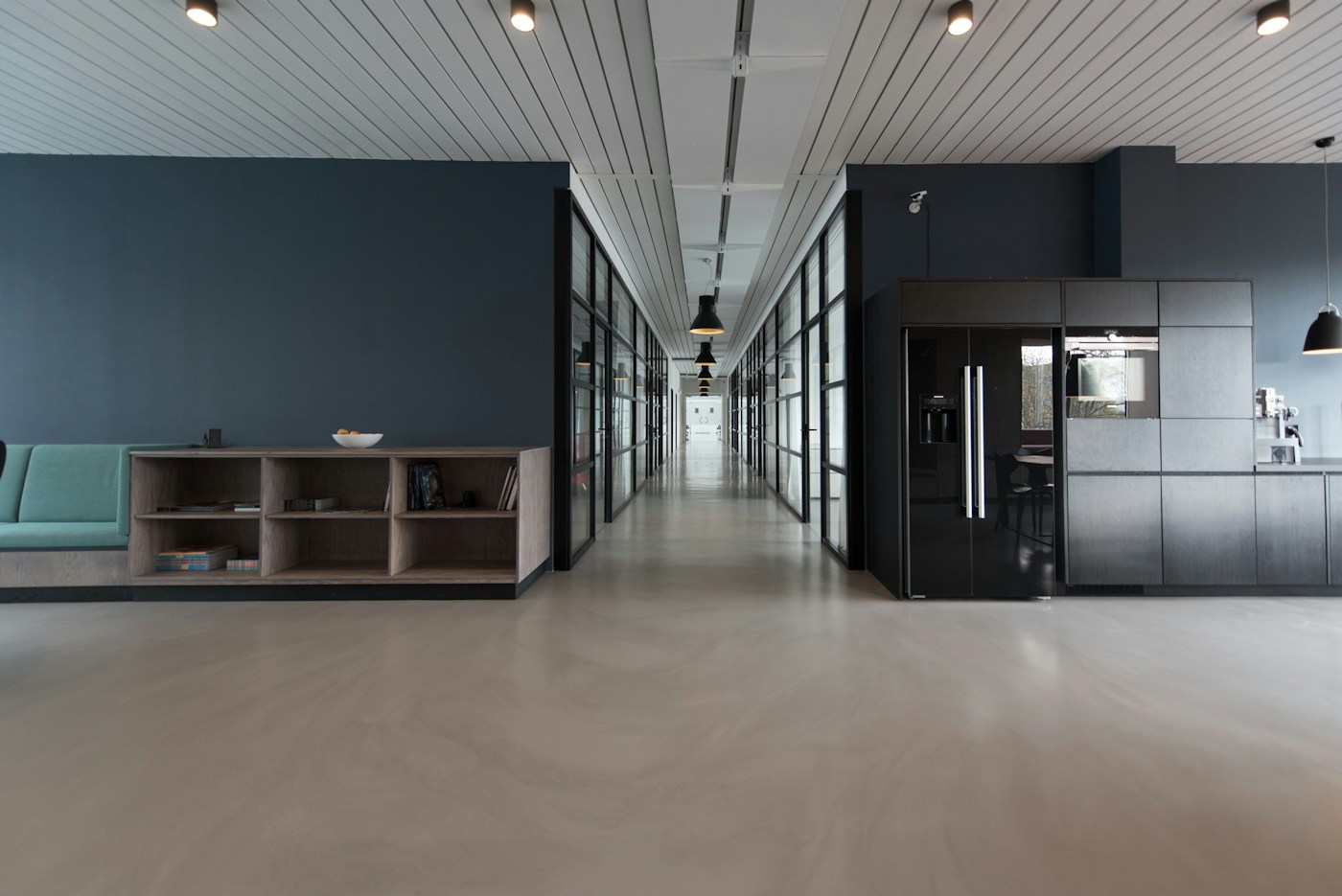
Imagine arriving at a bright, well-designed office every morning. There's fresh coffee waiting, the WiFi is fast, the chairs are comfortable, and the people around you are focused and professional. You have everything you need to do your best work.
Now imagine you don't work for the company that owns that office. In fact, nobody around you does — they all work for completely different companies, on completely different things. Some are freelancers. Some are remote employees. Some are running their own businesses. They simply all chose to work in this same space, together.
That's coworking. And it's changing how millions of people around the world think about where they work.
- What coworking actually means
- How a coworking space works day-to-day
- Who uses coworking spaces?
- The different types of coworking membership
- What's included in a coworking space
- What does coworking cost?
- Coworking vs. the alternatives
- The real benefits of coworking
- The honest downsides
- Is coworking right for you?
What coworking actually means
The word "coworking" is simple: it means working alongside other people who you haven't necessarily chosen as colleagues — people from different companies, industries, and backgrounds who share a common workspace.
The key word here is shared. A coworking space is a workspace that many different people and organisations pay to use, typically on a membership or subscription basis. Nobody owns the whole office. Nobody is your boss. You're all just choosing to work in the same well-equipped place.
Think of it like a gym, but for work. You pay a monthly membership. You can turn up whenever you like. You use the equipment and facilities. You might get to know some regulars, but everyone is there doing their own thing. The gym doesn't employ you — it just provides the environment for you to do what you need to do.
The concept emerged in San Francisco in the mid-2000s and spread rapidly across the world. Today there are estimated to be over 35,000 coworking spaces globally. In Sweden alone, hundreds of spaces operate across cities large and small.
How a coworking space works day-to-day
Walking into a coworking space for the first time can feel slightly unfamiliar if you've only ever worked in a traditional office. Here's what a typical day actually looks like.
- 1You arrive and check inMost spaces use a key fob, an access card, or an app on your phone. You swipe, the door opens, and you're in. Some smaller spaces have a front desk; many are fully automated.
- 2You find a deskIf you have a hot desk membership, you pick any available open desk. If you have a dedicated desk, you go straight to your assigned spot. Set up your laptop, plug in, and you're working.
- 3You use the shared facilitiesCoffee from the kitchen, the printer, the phone booth for private calls, the meeting room you booked online — all available as part of your membership. No need to ask permission.
- 4You interact as much — or as little — as you likeSome days you'll chat over coffee with someone doing something interesting. Some days you'll put headphones in and work through lunch. Both are completely fine. There's no social obligation.
- 5You pack up and leaveAt the end of your working day, you pack your things and go. Unlike a traditional office, there's no expectation to stay late to look committed.
Who uses coworking spaces?
This is where a lot of people are surprised. The popular image of coworking is a room full of young tech entrepreneurs. The reality is much more diverse.
Freelancers
Writers, designers, developers, photographers — people who work for multiple clients and need a professional base.
Remote employees
People employed by a company but working away from the HQ — who want a proper workspace without a long commute.
Startup founders
Early-stage teams not yet ready to sign a long-term office lease but needing somewhere professional to work and meet investors.
Digital nomads
People who travel while working and need a reliable workspace in whichever city they're in this month.
Corporate teams
Larger companies using coworking for satellite offices, project teams, or as a flexible option for hybrid employees.
Students & researchers
Postgraduates who want a professional atmosphere away from noisy libraries or distracting home environments.
In Sweden specifically, coworking users also include many people who've left Stockholm or Göteborg for smaller cities, but who still need a professional workspace. Coworking has made it possible to maintain a career at the same level while living somewhere quieter and more affordable.
The different types of coworking membership
Most coworking spaces offer several tiers of membership, each suiting different working styles and needs.
What's included in a coworking space?
While every space is different, a typical mid-range coworking space in Sweden will include the following as standard:
- High-speed internet — Enterprise-grade fibre, often 500 Mbps to 1 Gbps. Far more reliable than home broadband.
- A desk and chair — Better spaces invest in ergonomic chairs and height-adjustable standing desks.
- Power sockets and USB charging — At every desk, not just some of them.
- Coffee and tea — Almost universally included. Often surprisingly good coffee.
- Kitchen facilities — Microwave, refrigerator, sometimes a dishwasher.
- Printing and scanning — Usually available as part of membership.
- Meeting rooms — Bookable online or via an app, often included up to a certain number of hours per month.
- Phone booths — Soundproofed booths for private calls, available on a first-come basis.
- Lockers — For hot desk members who need somewhere secure to store belongings.
- Events and community — Networking evenings, workshops, talks — the social infrastructure that separates good coworking from expensive desk rental.
What does coworking cost?
Pricing varies by city, space quality, and membership type. A general guide for Sweden in 2026:
| Membership type | Typical price (SEK/month) | Best for |
|---|---|---|
| Day pass | 200–450 SEK per day | Occasional users, travellers, trying a space |
| Part-time hot desk (8–12 days) | 1,200–2,500 SEK | Hybrid workers, part-time freelancers |
| Full-time hot desk | 2,500–4,500 SEK | Freelancers and remote workers |
| Dedicated desk | 4,500–7,000 SEK | Daily users who want their own setup |
| Private office (per person) | 7,000–15,000+ SEK | Small teams, privacy-sensitive work |
If you're self-employed in Sweden, the membership is typically a fully deductible business expense — reducing the effective cost by 20–30% depending on your tax situation.
Coworking vs. the alternatives
| Option | Pros | Cons |
|---|---|---|
| Working from home | No commute, no cost, full control of environment | Isolation, distractions, blurred work-life boundary |
| Coffee shop | Social atmosphere, no commitment | Unreliable WiFi, noise, no privacy, no ergonomics |
| Library | Free, quiet, widely available | No calls allowed, limited hours, no community |
| Traditional office lease | Total privacy, full control | Very expensive, long contracts, you manage everything |
| Coworking space | Professional environment, community, flexible contracts, all amenities included | Monthly cost, shared environment (some noise) |
The real benefits of coworking
It solves the loneliness problem. Working alone is quietly isolating for many people. The casual social interactions of a shared workplace support mental health, fuel creativity, and provide the ambient human energy that makes sustained focus feel natural rather than forced.
It creates serendipitous opportunities. Sitting next to someone in a completely different field often leads to unexpected value — a referral, a collaboration, a new client, or simply a useful perspective.
It separates work from life. Having a place you go to work — physically separate from where you live — is psychologically valuable. The commute, even a short one, creates a mental transition that helps you start and stop properly.
It gives you a professional presence. A coworking address gives freelancers and small business owners somewhere professional to direct clients, hold meetings, and register their company.
It scales with you. A coworking membership adjusts as your needs change. Growing your team? Move to a larger room. Travelling for three months? Pause your membership.
The honest downsides
It costs money. If you have a perfectly good home setup, coworking is an added expense. For some people, working from home or a library is simply more sensible.
Open-plan noise can be challenging. If your work requires deep, uninterrupted concentration and you're sensitive to noise, a busy coworking space can be difficult. Good spaces have quiet zones and phone booths, but they're not silent.
You can't fully personalise your space. On a hot desk membership, you set up and pack away every day. A dedicated office setup with multiple monitors and personal touches isn't possible.
The community isn't guaranteed. Quality varies enormously. Some spaces are genuinely vibrant; others are just desk rental with nicer branding. If community is a priority, visit before you commit.
Is coworking right for you?
Coworking is likely a good fit if you answer yes to any of these:
- You work independently and don't have a company office to go to.
- You work from home but find yourself distracted, isolated, or struggling to switch off.
- You have regular client meetings and need somewhere professional to host them.
- You're new to a city and want to build a professional network quickly.
- You're running a small team and not yet ready to sign a multi-year office lease.
- You want faster, more reliable internet than your home broadband provides.
- You simply want to be around other people who are working hard.
Coworkin lists verified coworking spaces across Stockholm, Göteborg, Malmö and beyond — all in one place, completely free to browse. Find a space near you
Coworking isn't for everyone, and it doesn't need to be. But for the millions of people who've tried it, it's fundamentally changed how they think about work — not just where they do it, but how much they enjoy it.